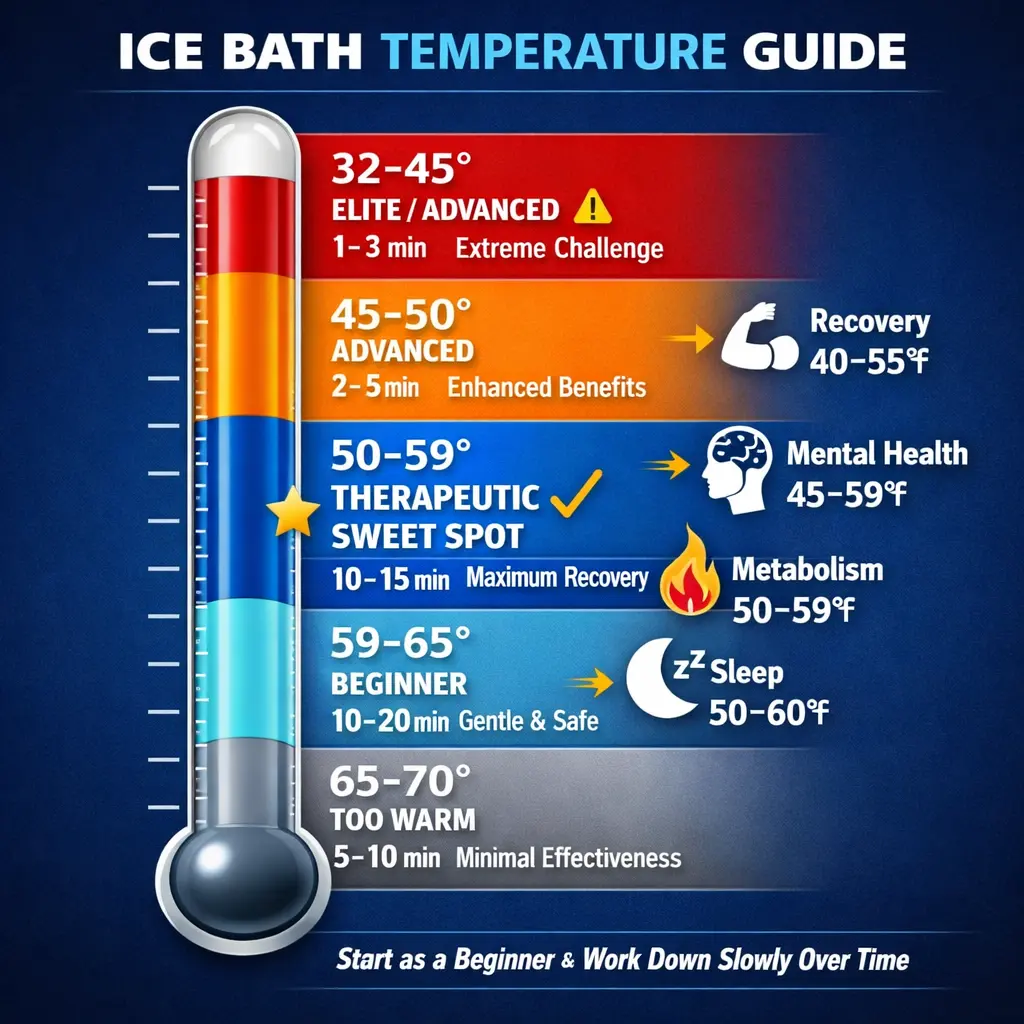
The ideal ice bath temperature is 50–59°F (10–15°C) for therapeutic benefit. This range produces the tissue cooling depth needed for muscle recovery and the neurochemical response associated with dopamine and norepinephrine elevation. Water below 50°F increases risk without proportionate additional benefit for most practitioners.
The Short Answer
50–59°F (10–15°C) is the optimal therapeutic range supported by the strongest clinical evidence. Beginners should start at 60–65°F and work down progressively. Professional athletes and advanced practitioners may target 39–50°F but this requires cold adaptation and carries higher risk.
Why Temperature Matters More Than Duration
Water temperature determines the rate of heat extraction from your body far more than duration does. A 10-minute session at 50°F produces approximately the same tissue cooling effect as a 20-minute session at 60°F. The cold shock response — elevated heart rate, sharp inhalation, the urge to exit — scales primarily with temperature, not time. This is why beginners are better served by warmer temperatures for longer than colder temperatures for shorter periods: the physiological stimulus is more manageable and the practice is sustainable.
Temperature Guide by Goal
Recovery (DOMS reduction): 52–59°F, 10–15 minutes. Supported by the 2016 Cochrane Review as optimal for reducing muscle soreness biomarkers.
Dopamine / mental health: 55–65°F, 5–10 minutes. Even warmer temperatures trigger significant norepinephrine elevation. You do not need extreme cold for neurochemical benefit.
Brown fat activation / metabolism: Any temperature below 60°F activates BAT. Dr. Søberg’s research used 57°F as a standard temperature in metabolic studies.
Sleep improvement: 58–65°F, 5–10 minutes in the morning. Evening cold plunges at extreme temperatures can temporarily elevate cortisol and delay sleep onset.
Performance recovery (elite athletes): 39–52°F, 10–15 minutes. This range is used in professional sports facilities and requires cold adaptation.
Beginner Temperature Progression
Week 1–2: 62–65°F. Focus entirely on breathing control, not temperature. Week 3–4: 58–62°F. Sessions of 3–5 minutes. You should feel challenged but not panicked. Month 2: 54–58°F. Full 10-minute sessions become achievable. Month 3+: 50–54°F. The standard therapeutic range is now accessible. Month 6+: Below 50°F. Only for experienced practitioners with established cold tolerance.
How to Achieve Your Target Temperature
Without a chiller (ice method): Start with cold tap water (typically 65–75°F depending on season). Add ice in increments and check with a thermometer every 5 minutes. 1 lb of ice per gallon of water lowers temperature approximately 1–2°F — actual results vary with ambient temperature.
With a chiller: Set your target temperature and allow 30–60 minutes for the chiller to reach it. Always verify with an independent thermometer — chiller displays are not always accurate.
FAQ Section
Q1: Is 60°F too warm for an ice bath?
A: No. 60°F is an effective therapeutic temperature, especially for beginners. Research supports benefits at temperatures up to 65°F. The key is consistency and duration, not pushing to extreme cold before your body adapts.
Q2: What temperature do professional athletes use?
A: Most professional sports facilities target 50–59°F (10–15°C). Elite facilities with purpose-built chiller systems may go as low as 39–45°F for post-match recovery, but this requires significant cold adaptation.
Q3: Can an ice bath be too cold?
A: Yes. Below 39°F (4°C) increases the risk of cold shock response, cardiac stress, and frostbite in prolonged exposure. There is no evidence of additional therapeutic benefit below 39°F compared to 45–50°F for most practitioners.
Q4: How do I know if my ice bath is the right temperature?
A: Use a dedicated pool or aquarium thermometer — not your hand. Hands and feet are disproportionately cold-sensitive and will feel 60°F water as much colder than it is. A floating digital thermometer is a $10–15 investment that makes your practice significantly more consistent.