
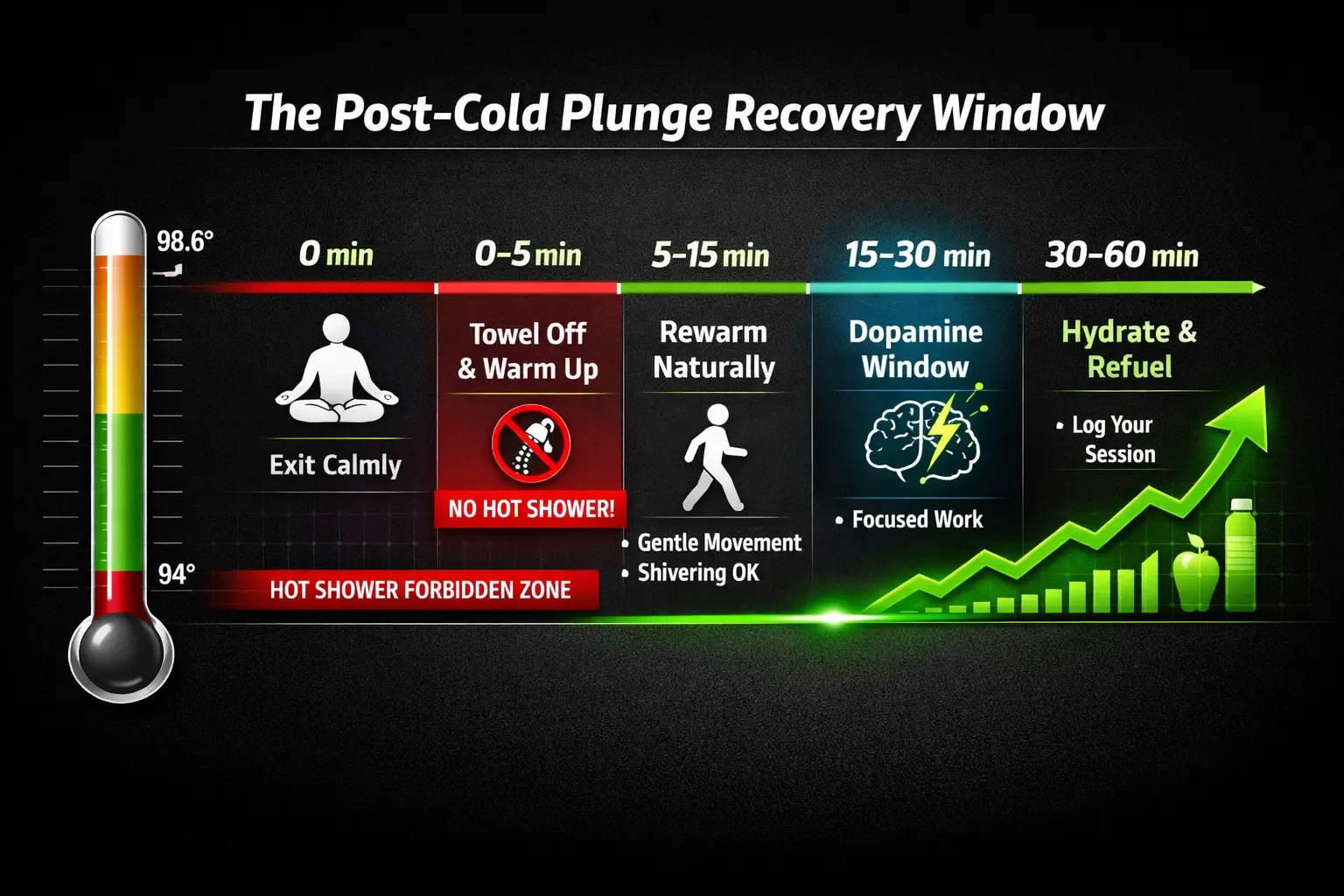
The 30 minutes after a cold plunge are as important as the plunge itself. Exit the water calmly, avoid immediately jumping into a hot shower, allow your body to rewarm naturally for 5–10 minutes, then move gently to amplify circulation. This post-plunge window is when the dopamine surge peaks and recovery processes activate most strongly.
The Short Answer
Exit calmly. Dry off. Stay in cool air (not heated) for 5–10 minutes. Dress in warm layers. Move gently. Do not take a hot shower for at least 10 minutes. The rewarming process is where much of the benefit happens.
Step 1: Exit the Water Calmly
How you exit matters. Stand up slowly — sudden movements after cold immersion can cause orthostatic hypotension (brief dizziness from blood pressure change). Step out, hold the edge if needed, take a breath. Exiting in a controlled, calm state extends the parasympathetic dominance that cold immersion creates.
Step 2: Do NOT immediately hot shower (the most common mistake)
The instinct after a cold plunge is to run for the hottest shower possible. Resist this for at least 10 minutes. The ‘after-drop’ — a brief continuation of core temperature cooling after exiting cold water — is where thermogenic calorie burn, BAT activation, and hormonal responses are amplified. An immediate hot shower cuts this process short. Towel off, put on warm clothes, and let your body do the rewarming work.
Step 3: Dry and Layer Up
Towel dry thoroughly, paying attention to extremities. Put on warm, loose-fitting clothes immediately. Your hands and feet will feel the cold longest — socks and gloves or mittens if needed. Shivering is normal and beneficial: it is a thermogenic process that burns calories and warms the body from within. Do not suppress it.
Step 4: Move Gently (Light Activity)
Light movement — a slow walk, gentle mobility work, easy stretching — accelerates the natural rewarming process and amplifies the vascular flushing effect. This is the ‘contrast’ without water: cold immersion followed by gentle movement creates powerful circulation-driven recovery. Avoid intense exercise for 30 minutes post-plunge.
Step 5: Capture the Dopamine Window
The dopamine and norepinephrine surge from cold immersion peaks 15–30 minutes post-plunge and lasts 3–4 hours. This window is ideal for focused mental work, creative tasks, or activities requiring motivation and concentration. Many practitioners structure their day around their morning cold plunge specifically to use this window productively.
Step 6: Hydrate and Consider Light Nutrition
Cold immersion is mildly dehydrating despite not feeling like exercise. Drink 250–500ml of water or electrolyte drink in the 30 minutes post-plunge. If you plunged post-workout, a protein source within 60 minutes supports recovery.
Step 7: Log Your Session
Note temperature, duration, how you felt during and after, and any performance or mood observations. This data, even a sentence in the Notes app, accelerates your cold tolerance progression and helps you identify the protocols that work best for your body.
FAQ Section
Q1: Should I take a hot shower after an ice bath?
A: Wait at least 10 minutes. An immediate hot shower cuts short the post-plunge rewarming process where thermogenic and hormonal benefits are amplified. After 10 minutes, a warm (not scalding) shower is fine.
Q2: How long does the cold plunge feeling last?
A: The immediate discomfort fades within 2 minutes of exiting. The elevated mood and energy from dopamine and norepinephrine elevation typically lasts 3–4 hours. Many practitioners report improved sleep quality the same night.
Q3: Is it normal to shiver after a cold plunge?
A: Yes and it is beneficial. Shivering is a thermogenic process — your body generating heat through rapid muscle contractions. It burns calories, warms the body, and is a sign the cold plunge reached a therapeutic depth. Do not suppress it.
Q4: Can I eat before a cold plunge?
A: Wait at least 1 hour after a large meal. Cold immersion redirects blood flow away from the digestive system, which can cause nausea if done immediately post-meal. A small snack 30 minutes prior is generally fine.